 presents...
An individual exhibiting such uniqueness or individuality that he or she will cause a roomful of bar cronies to exclaim, "That's one interesting motherfucker!" Actual sexual relations with one's mother are not required.
| presents... |
Interesting
Motherfucker: (noun) An individual exhibiting such uniqueness or individuality that he or she will cause a roomful of bar cronies to exclaim, "That's one interesting motherfucker!" Actual sexual relations with one's mother are not required. |
 |
|
 |
By
Wil Forbis
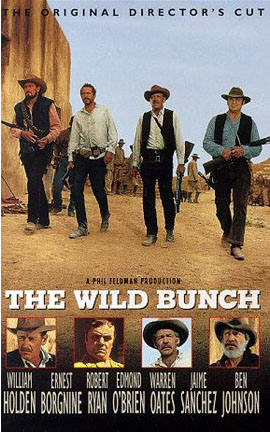
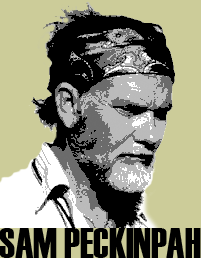
When I was a kid, a big thing in the neighborhood was playing a game of cops and robbers. Usually, I'd be chased by one of the other neighborhood boys who would would raise his imaginary pistol and point it at me, yelling "bang, bang!!" In return, I would turn around, raise my pistol and fire. That kid's head would burst open like a rotten watermelon and he'd hit the ground dead. Because I wasn't using an imaginary pistol but a real one that I'd found in my dad's sock drawer. A couple years later, when I got out of juvie, cops and robbers was a still a big game. This time we only used imaginary guns. And when anyone got hit by an imaginary bullet they would fall backwards, clutching their chest as if a mixture of blood and tissue were rocketing outward*. Then they would hit the ground in slow motion, emitting a baritone scream as if time itself were slowing down for their death throes. * A friend of mine who's rather knowledgeable about these sorts of things (I think he's shot a bunch of people) informs me that the classic cinematic gunshot death --- where people are thrown backwards from the force of a bullet --- is physically impossible. In reality, the bullet sort of cleaves its way into your body without a lot of full body impact. Try shooting a few people and you'll see what I mean. Little did we know it, but we were emulating a kind of dying made popular by Sam Peckinpah. For it was the infamous director of such films as "The Wild Bunch", "Straw Dogs" and "Cross of Iron" who authoritatively defined the classic archetypical movie death described below: HOW TO DIE THE SAM PECKINPAH WAY!!* 1) Bullet hits you, sending bloody, meaty particles bursting out of your chest. 2) Fall over backwards and roll about on sun-chafed desert floor. 3) Feel time slow down as everything switches to slow motion and all audio drops several octaves. * By this we mean, how to die in a movie the Sam Peckinpah way. If you want to die the way Sam Peckinpah died, chain smoke, chain drink, and do cocaine for 40 years and you should do just fine. Notching up the level of violence found in movies consumed by wide eyed youngsters is perhaps not the greatest contribution one can make to world culture. But there's no doubt such pursuits are enough to credential a person as an Interesting Motherfucker, and cause the silent hordes of pop-culture prospectors to hungrily seek further information about such a life. Peckinpah was a child of the west, born in Fresno California in 1925. Though he was small a boy, and consequently a small man, he was a scrapper---always eager for a fight whether or not he was in the wrong or right. (Hey, that rhymes!) It was a characteristic he showed throughout his life. His battles (sometimes verbal, sometimes physical) with actors and producers of his movies, the film critics who panned him, the women he married and the whores he screwed were legendary. He was man perennially in "War" mode, although, during his brief Army stint at the end of World War II of he saw no action.
Upon entering adulthood, Sam was soon attracted to the world of theater. Together with his first wife, Marie, Peckinpah enrolled in the University of Southern California's theater program. From there, he graduated to directing shows at local playhouses in the Los Angeles area. This led to some early television work, and his first movie gig: dialogue director on the classic sci-fi piece, "Invasion of the Body Snatchers." (Peckinpah has a small role in the film as Charlie, the meter reader, who like most characters in the film, is converted to a pod person.) Then Peckinpah's career took a significant turn: he landed a series of writing gigs for television shows like "Gunsmoke," "Blood Brother" and "Have Gun - Will Travel." Western themed shows are about as common on television these days as funny sit-coms (all you According to Jim fans can blow me), but in the late 50's the boob tube was filled to the brim with tough talking hombres who traveled the high planes delivering their own brand of harsh justice. And Peckinpah's scripts were known for pushing the things just a little further than the suits in the head office wanted to go. Arnold Laven, producer of the series Peckinpah really made a mark on, "The Rifleman," commented, "The 'Rifleman' was a tough, hard-hitting show, but the violence didn't have that meanness. There was a reality and meanness to Sam's violence that bothered me." In 1961, that meanness got its first shot at the big screen. Following the implosion of his first marriage, Peckinpaugh sat in the directing chair for "Deadly Companions", a movie length version of the TV westerns he'd been writing. The film tanked, destroying the company that had produced it. Nonetheless, Peckinpah got another shot the following year with "Ride the Country." Also a western, the film was a bit more successful and got Sam some critical notice. This led to "Major Dundee," a Civil War pic starring Charlton Heston. It was during the making of this film that the quintessential Sam Peckinpah began to appear. He would drink like a fish, patronize prostitutes (paying them out of the movie buget) and fire crew members in screaming fits of rage. His antics so infuriated Heston that the legendary actor charged at Peckinpah on horseback while brandishing a saber. After the film wrapped Peckinpah fought with the producers over the final cut. (A battle they won.) The movie was panned critically, and when Peckinpah repeated his behavior during his next gig, "The Cincinnati Kid," he was fired. It was 1964. Peckinpah was closing in on 40 and it looked like his career was over. He spent the next four years drinking, writing scripts, drinking and tinkering around his house in Malibu. He was still recognized as a skilled director, but no-one wanted to touch him due to the fact that he was insane. But while Peckinpah brooded, something was happening to society at large. The dark half of the 60's began to emerge. The faux-violence of the television western morphed into the very real televised violence of Viet Nam. Martin Luther King and other prominent political figures were assassinated. Riots erupted in the streets. The cultural landscape of America was altered in a way the country had never seen before. And the stage was set for Peckinpah to direct "The Wild Bunch." Arriving in theaters in 1969, Peckinpah's "The Wild Bunch" was such an orgy of violence and blood that it probably could not have been shown in mainstream movie houses even a few years before its release. The film was a Western set in the declining years of Western lore. Automobiles had begun to replace horses. The skill and tenacity required to fire a rifle was being supplanted by the scattershot destruction of the machine gun. With this backdrop in place, Peckinpah followed an amoral band of bank robbers who are hired by a Mexican general to steal a trainload of guns. After the general apprehends one member of the gang, the surviving group decides there is such a thing as honor amongst thieves and they go back to rescue their compatriot. The result is a twenty minute gun battle that would raise eyebrows even today for its vast carnage. Soldier after soldier is hit with machine gun bullets causing their chests to burst open as they rocket back from the impact. Peckinpah was defining his vision of violence. It was bloody, an effect Peckinpah achieved by attaching blood and meat filled condoms (squibs) that could be primed to explode on the actor's bodies. But it had an almost mythological aesthetic. When the audience saw death from a character's point of view, they felt the reel slow down as time came to a standstill and then suddenly speed up to faster than normal as the actor's body hit the ground and his soul was sucked away to whatever afterlife he'd earned. And it goes without saying that very few characters make it out of the film alive.
|
|
While "The Wild Bunch" was a depiction of mega-warfare, as well-armed groups were pitted against each other en masse, "Straw Dogs" presented its violence on a much more personal level. An Uber-nerd mathematician played by Dustin Hoffman moves with his wife to her hometown, a small, English village. Determined to lose himself in his work, Hoffman's character, David, doesn't notice his wife balking at the tedium of her existence as a housewife or the interest she provokes from the local ruffians. He's awakened from his intellectual stupor when he decides to take into his home a dull-witted pedophile who is being stalked by an angry mob. The nebbish scholar surprises himself at his propensity for violence as he dispatches the attackers one by one using hand-to-hand combat and a variety of low-tech tools. (A steel-jawed man-trap replaces the machine gun as the weapon of notice.) But what made "Straw Dogs" such an notorious film was not its brutality but the cynical attitude Peckinpah displayed while creating such carnage. When the local thugs break into David's house to rape his flirtatious wife, there are more than a few hints that she enjoys it (up to a point.) And while David at first tries to peacefully sort out his problems with locals, it's not until he turns to brutality that any real resolution is reached. Violence, Peckinpah seemed to be saying, is the final arbitrator of who is wrong or who is right. “The Wild Bunch” had already marked Peckinpah as a director with a fetish for sadism; “Straw Dogs” secured this reputation. Critics lauded the technique of the film but panned its content. And “Straw Dogs” proved to be the last “great” film Peckinpah would make. He continued working during the ‘70s and ‘80s knocking out some credible material, like “Cross of Iron” starring James Coburn as well as some genuine stinkers like 1983’s “The Osterman Weekend.” He picked up a cocaine habit in the ‘70s, to replace the alcohol, but they ended up being perfect compliments for each other. His health deteriorated, he suffered a few heart attacks and finally cleaned up his act in the early 1980s. But, by this point , his years of living dangerously had taken their toll. He died of cardiac arrest on December 28th, 1984. In a sense, Sam Peckinpah never died. Because whenever you see a film featuring gaping chest wounds, mass carnage, slow-motion death scenes and amoral heroes, you’re seeing the influence of Sam Peckinpah. His work is alive and well in the movies of John Woo, Walter Hill, Sam Raimi and Quentin Tarantino. And hopefully, Bloody Sam, wherever he is, can see these films and smile.
Wil Forbis writes many strange and amusing things for a variety of top secret organizations like Entertainment Weekly. View Wil's Acid Logic web log!
|
|
HOME
- LINKS - SEARCH
- BUY!!!
Columns - Features
- Interviews - Fiction
- Acid Radio - GuestBook Sign/View
- Blogs
View ForbistheMighty.com for more
sin and wackiness!
Email Publisher